
Bayern Munich and Juventus have never shared a domestic league, yet their Champions League encounters have carved a rivalry as intense as any derby. I still remember the 2016 round of 16 second leg in Munich—Juventus led 2-0 after 28 minutes。and the Allianz Arena fell into a stunned silence. What followed was a Bayern siege that ended 4-2 after extra time, a comeback that felt almost inevitable given the German side's relentless pressing. That match epitomized the dynamic: Juventus, masters of Italian defensive structure, against Bayern's high-octane attacking machine.Historically, the two clubs represent contrasting football philosophies. Juventus built their modern identity on a backline of Chiellini。Bonucci, and Barzagli—a trio that conceded just 20 goals in the 2015-16 Serie A season. Bayern, meanwhile, under Jupp Heynckes and later Hansi Flick, favored aggressive full-backs and quick transitions. Their 2013 quarter-final tie was a tactical chess match: Bayern won 2-0 in Turin, but Juventus responded with a disciplined 0-0 in Munich, frustrating Bayern's wing play. I recall Arjen Robben cutting inside repeatedly only to meet the wall of Giorgio Chiellini—a duel that defined the tie.Transfer links have added spice. Arturo Vidal moved from Juventus to Bayern in 2015, and Kingsley Coman went the opposite way on loan before a permanent switch. These deals rarely favor both sides equally—Vidal's aggressive style suited Bayern's midfield but his discipline waned;Coman blossomed in Germany after limited minutes in Turin. More recently, Matthijs de Ligt's 2022 transfer from Juventus to Bayern for €67 million raised eyebrows, given his slow adaptation to Serie A. Such exchanges reveal a mutual respect for talent but also a willingness to exploit each other's contract situations.On the pitch。
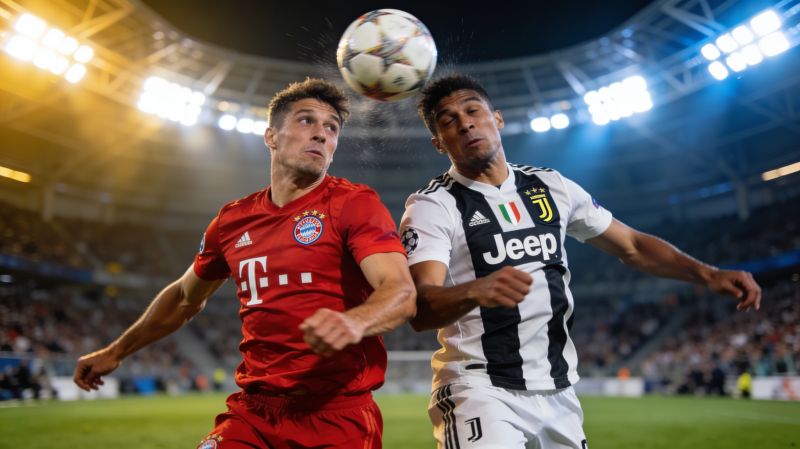
the head-to-head record is tighter than casual fans might assume. In their last six Champions League meetings, Bayern have won three, drawn one, and lost two—hardly dominance. The 2018 group stage clash at the Allianz Arena ended 1-0 to Bayern via a late Robert Lewandowski penalty, but Juventus had already qualified. What stands out to me is how both clubs use these matches as benchmarks. Bayern's 4-2 comeback in 2016 masked defensive frailties that Pep Guardiola's successor, Carlo Ancelotti, never fully fixed. Juventus's 2-0 win in Turin in 2016 exposed Bayern's vulnerability to counter-attacks—a lesson Manchester City later exploited.Looking ahead, the rivalry may cool as squad turnovers reshape both sides. Juventus's post-Ronaldo rebuild focuses on youth like Federico Chiesa and Dusan Vlahovic;Bayern grapples with the post-Lewandowski era, leaning on Jamal Musiala and Harry Kane. A future Champions League draw would still carry weight—not because of geography or history。
but because these clubs test each other's tactical flexibility like few others. I'd argue that no other cross-league pairing offers such a clean contrast between Latin defensive craft and Germanic attacking drive. That's why Bayern Munich and Juventus remain a fixture worth circling on the calendar, even if their meetings are sporadic.